

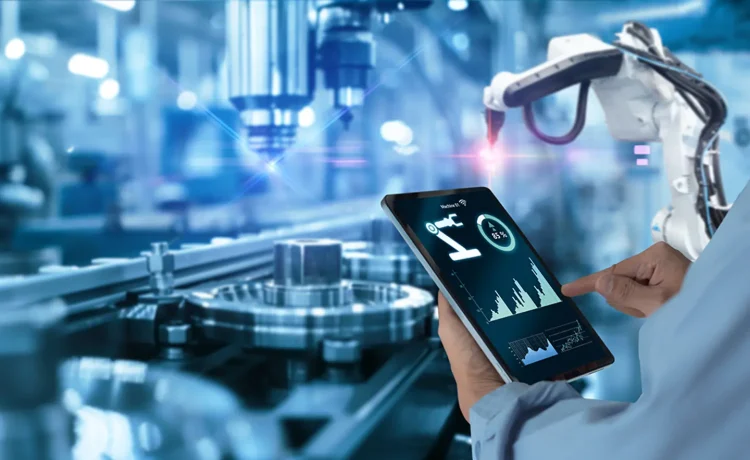
The global manufacturing landscape is undergoing a profound transformation. The days of isolated machines, manual data logging, and reactive maintenance are rapidly fading into the past. In their place, a new industrial paradigm has emerged: the smart factory. Driven by the technologies of the Fourth Industrial Revolution, or Industry 4.0, smart factories represent a leap forward from traditional automation to a fully connected, flexible, and digitized production ecosystem.
A smart factory is not merely a plant with newer computers. It is a highly integrated system where production assets, supply chains, and enterprise systems communicate dynamically. By leveraging real-time data, machine learning, and autonomous systems, these facilities optimize their own operations, adapt to changing demands in real time, and achieve unprecedented levels of efficiency. Understanding how these factories operate, the technologies that power them, and the tangible benefits they offer is essential for any business aiming to remain competitive in the modern market.
The Core Pillars of Smart Manufacturing
To understand the efficiency of a smart factory, one must look at the foundational technologies that act as its nervous system, brain, and muscle. These technologies do not operate in silos; instead, they converge to create a continuous loop of data collection, analysis, and action.
The Industrial Internet of Things (IIoT)
At the ground level of any smart factory are sensors and actuators embedded within every piece of machinery. The Industrial Internet of Things (IIoT) refers to this vast network of connected devices. These sensors continuously monitor variables such as temperature, vibration, pressure, and processing speed. By converting physical phenomena into digital data, IIoT provides the raw visibility required to understand exactly what is happening on the factory floor at any given millisecond.
Big Data and Advanced Analytics
The sheer volume of data generated by IIoT devices is astronomical. Traditional databases are ill-equipped to handle this influx. Smart factories utilize big data analytics platforms to process this information, stripping away the noise to find actionable insights. Advanced analytics tools look for patterns, historical correlations, and anomalies that human operators could never detect manually. This data-driven intelligence shifts manufacturing from a state of historical review to real-time awareness.
Artificial Intelligence and Machine Learning
If data is the fuel, Artificial Intelligence (AI) and Machine Learning (ML) are the engines. AI algorithms use the stream of analyzed data to make autonomous decisions. For example, an ML model can learn the optimal operating parameters for a CNC machine based on the specific material being cut and the ambient humidity in the room. Over time, these systems self-optimize, improving their accuracy and efficiency without requiring human programmers to rewrite code.
Cyber-Physical Systems and Digital Twins
A defining characteristic of a smart factory is the concept of a digital twin. A digital twin is a virtual, real-time replica of a physical asset, production line, or the entire factory itself. By mirroring the physical world in a digital environment, engineers can simulate scenarios, test production changes, and predict outcomes before implementing them in reality. This minimizes the risk of downtime and eliminates the waste associated with physical trial-and-error.
How Smart Factories Redefine Operational Efficiency
The integration of these advanced technologies yields massive improvements across every metric of manufacturing performance. Efficiency in this context means maximizing output while minimizing waste, time, energy, and capital.
Predictive Maintenance Over Reactive Repair
In conventional manufacturing, machines are serviced on a fixed schedule or repaired after they break down. Both methods are inefficient. Scheduled maintenance often replaces perfectly good parts, while unexpected breakdowns halt production and incur massive repair costs.
Smart factories utilize predictive maintenance. By analyzing sensor data, such as a subtle increase in motor vibration or a micro-spike in power consumption, AI tools can predict precisely when a component is likely to fail. Maintenance can then be scheduled during planned downtime, preventing catastrophic failures and extending the lifespan of expensive equipment.
Dynamic Production and Extreme Flexibility
Consumer demands are shifting toward hyper-customization and shorter product lifecycles. Traditional assembly lines are rigid, requiring extensive downtime to retool for a different product variant.
Smart factories solve this through dynamic orchestration. Automated Guided Vehicles (AGVs) and Autonomous Mobile Robots (AMRs) transport materials between modular work stations rather than relying on fixed conveyor belts. When a order for a customized product enters the system, the factory automatically reroutes the components to the specific machines capable of performing the required customizations, allowing for high-mix, low-volume production at a cost structure comparable to mass production.
Optimizing Resource and Energy Consumption
Sustainability and cost-efficiency go hand in hand in modern manufacturing. Smart factories monitor energy consumption across the entire facility in real time. If certain processes consume high amounts of electricity, the system can automatically schedule them during off-peak hours when utility rates are lower. Furthermore, precise process control reduces material scrap, optimizes raw material usage, and lowers the overall carbon footprint of the production facility.
Overcoming the Challenges of Implementation
While the benefits of transitioning to a smart factory model are undeniable, the journey requires overcoming significant technical and organizational hurdles.
-
Legacy System Integration: Most manufacturing firms operate a mix of decades-old machinery and newer equipment. Getting these disparate systems, which often use proprietary communication protocols, to talk to a centralized digital platform is a major engineering challenge.
-
Cybersecurity Vulnerabilities: Connecting a factory floor to the internet opens up the infrastructure to cyber threats. A breach in a smart factory could result in stolen intellectual property, compromised product quality, or a complete halt of physical operations. Robust, multi-layered cybersecurity protocols are non-negotiable.
-
The Workforce Skills Gap: The role of the factory worker changes dramatically in a smart facility. Manual labor is replaced by data interpretation, system monitoring, and robotic collaboration. Companies must invest heavily in upskilling their existing workforce to handle these digital tools.
The Future Baseline of Global Industry
The transition to smart factories is no longer an experimental venture reserved for industry giants with limitless research budgets. As the cost of sensors, cloud computing, and AI software continues to decline, small and medium-sized enterprises are adopting these technologies to defend their market share.
In the coming decade, facilities that rely on manual workflows and siloed operations will struggle to compete on speed, cost, and quality. The smart factory has successfully moved from an idealistic vision of the future to the contemporary standard for world-class manufacturing efficiency.
Frequently Asked Questions
What is the difference between a traditional automated factory and a smart factory?
Traditional automation involves machines programmed to perform repetitive tasks blindly, relying on human intervention when anything deviates from the script. A smart factory goes beyond repetition by utilizing interconnected systems, sensors, and artificial intelligence to analyze data, learn from environments, make autonomous decisions, and adapt to changes in real time without human guidance.
Do smart factories eliminate the need for human workers?
Smart factories change the nature of human work rather than eliminating it entirely. While repetitive manual tasks and hazardous duties are increasingly automated, human workers are shifted to higher-value roles. These roles include data analysis, system architecture design, machine learning model training, cybersecurity management, and complex problem-solving.
How does a smart factory improve supply chain resilience?
Because a smart factory is digitally connected, it can share real-time production and inventory data with upstream suppliers and downstream logistics providers. If a delay occurs or a demand spike is detected, the factory can automatically adjust production schedules or trigger raw material orders, mitigating the bullwhip effect and preventing supply chain bottlenecks.
What is Edge Computing and why is it important for smart factories?
Edge computing refers to processing data close to where it is generated, such as directly on the factory floor or within the machine sensor itself, rather than sending all data to a centralized cloud server. This is critical for smart factories because it eliminates data latency, allowing machines to make split-second, autonomous safety and operational decisions without waiting for network transmission.
Can old manufacturing facilities be converted into smart factories?
Yes, this process is known as brownfield upgrading. Manufacturers do not need to build a new facility from scratch. They can retrofit existing legacy machinery with external IIoT sensors, gateways, and software interfaces to collect data and integrate older assets into a modern, centralized digital architecture.
How do smart factories impact product quality control?
Instead of inspecting products at the end of the assembly line when errors have already occurred, smart factories utilize in-line automated vision systems and sensors to monitor quality at every stage of production. If a defect or variance is detected early, the system can halt the specific process or self-correct parameters instantly, ensuring that defective goods never reach the end of the line.